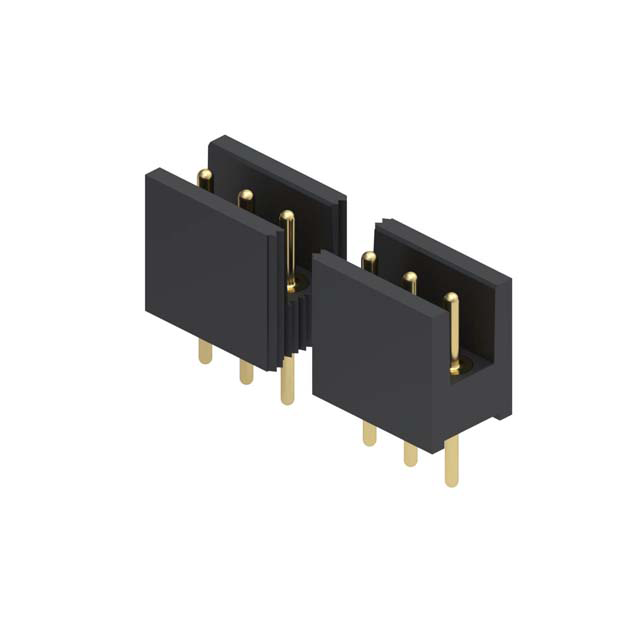
- Single Inline Package (SIP)/Strip
An interconnect component that consists of a rectangular insulator populated with either pins, receptacles, or spring pins. Useful for applications that require mounting multiple discrete interconnect components onto a PCB in a consistent standard pitch. Pitch/pin-to-pin spacing options range from 1mm (.0394”) to 4mm (.1575”), including single, double, and triple row options as well as different termination styles such as through hole, SMT, wire termination and press-fit. View Examples
- Solder Wicking
A problem during a soldering operation where reflowed solder climbs up a lead towards the component and causes reduced solder at the intended joint(s). In open-bottom receptacles, wicking can also lead to solder buildup inside of the component body which may be problematic when inserting a mating lead. Mill-Max's line of organic fibre plug (OFP) receptacles were designed to prevent this by plugging the open bottom with a disposable barrier. View Examples
- Molded Plastic Insulator
An insulator fabricated by means of an injection molding operation. Most often specified for high volume applications and/or when certain complex features need to be included on the housing. Common material offerings include: PCT polyester, Nylon 46, and PPS (Ryton R-4-200).
- Initial/Pre-Load Force
The force required to begin actuating/compressing the plunger component of a spring-loaded product. The value of this force is dependent on the specific spring used in the assembly.
- Socket
A female interconnect component which is comprised of discrete receptacles assembled into a plastic insulated housing. Intended as the mating half to a suitable male header with appropriate pitch and lead diameters. Offered with various acceptance ranges, grid spacings, position counts and mounting styles; custom designs can also be explored upon request. View Examples
- Shock
Shock is defined as a motion in which there is a sharp, sudden change in velocity. Excessive shock applied to an electrical connection can result in physical damage to the components, electrical discontinuity, and/or signal loss.
- Shank
Typically considered the upper-body section on a swage pin, this feature is dropped into a mounting hole to perform the swaging/riveting operation. Multiple shank lengths are commonly offered for a single swage pin, varying according to the suggested PCB thickness. A coaxial hole is provided on this feature to allow for the insertion of swage tooling to perform the fastening operation. View Swage Terminal Pins
- Header
A male interconnect component which is comprised of discrete pins assembled into a plastic insulated housing. One end of the product is manufactured with a post/lead, designed to act as the mating half to a suitable female socket with an appropriate pitch and acceptance range. Offered with various lead diameters, grid spacings/pitch, position counts and mounting styles; custom designs can also be explored upon request. View Examples
- Slot
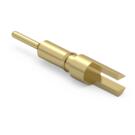
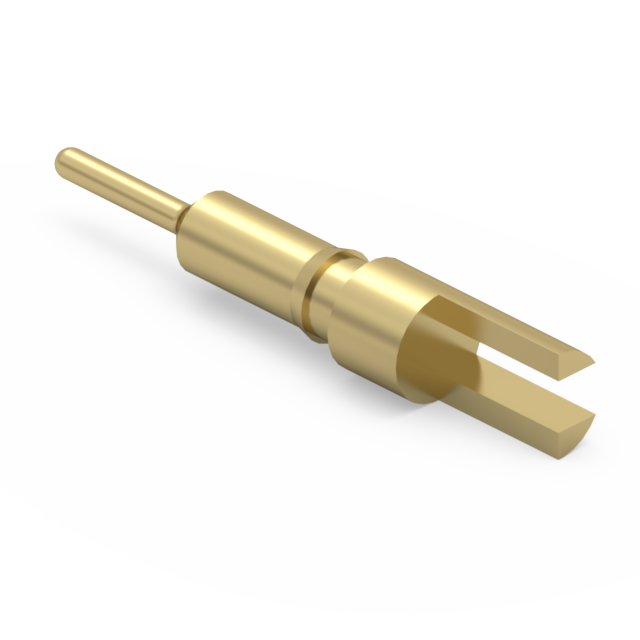
A machined feature on an interconnect component in which a section of material is removed from one end by a saw or cutter blade. This feature can be used for a variety of applications including wire termination and alignment purposes. The slot often creates a bifurcated fork at the end of the part, with the opposite end being soldered, swaged or press-fit mounted into the board. View Examples
- Shroud
A style of male and female interconnects which uses plastic housings with high walls surrounding the protruding pin array. Once mated, one half of the connector will reside inside the other to create a tight, guided/keyed fit-up and prevent mating error or misalignment. View Examples