
Maxnetic Connector Applications
Applications Across Markets
Maxnetic® magnetic connectors combine spring-loaded contacts with magnetic alignment to provide reliable power and signal transmission in compact, user-friendly designs. These magnetic electrical connectors are ideal for applications that require frequent mating cycles, fast engagement, and dependable performance.
| Medical Devices: Wearable monitors, handheld diagnostic equipment, patient-worn devices, and charging stations that require reliable magnetic connections and frequent connection/disconnection cycles. |
| Industrial Automation: Modular robotics, automated production equipment, and smart factory systems that demand robust electrical interfaces, efficient maintenance, and minimal downtime. |
| Military Equipment: Quick-release charging docks, portable communications equipment, and rugged data interfaces designed for secure field deployment. |
| Consumer Electronics: Charging and data synchronization solutions for portable electronics, smart devices, and embedded systems that benefit from intuitive magnetic engagement. |
Benefits of Magnetic Connectors
Across these applications, Maxnetic® connectors simplify conventional mating processes, improve user experience, and provide engineers with greater design flexibility for power and signal interconnects. Their self-aligning magnetic design supports reliable performance, frequent mating cycles, and compact product development across a wide range of applications.
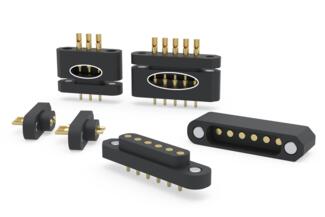
- Self-aligning magnetic engagement for fast, intuitive connections
- Reliable power and signal transmission through spring-loaded contacts
- Reduced wear caused by connector misalignment
- Quick connection and disconnection for frequently mated devices
- Low-profile designs that support compact product development
- Customizable configurations for application-specific requirements
Design Considerations for Engineers
When integrating magnetic connectors into a new design, several key factors should be evaluated to ensure optimal performance and long-term reliability. Here’s a guide to the most critical specifications and characteristics to consider:
Magnetic strength and alignment | The effectiveness of a magnetic connector begins with proper alignment. Magnetic electrical connectors rely on carefully engineered magnetic forces to guide mating components into position and ensure consistent electrical performance. Engineers should evaluate magnet polarity and orientation features that promote secure, repeatable engagement and prevent mis-mating. Strong neodymium magnets with built-in polarity controls help guide connector halves into alignment with minimal user effort. |
|---|---|
Electrical ratings | To select the right magnetic connector, begin by evaluating the power and signal requirements of your application. Consider the maximum current per contact, operating voltage, signal integrity requirements, and total number of contacts needed. For higher current loads, larger contact sizes and wider spacing may be required to minimize thermal buildup. Understanding the electrical demands of the application helps balance performance, reliability, and connector size. |
Mechanical integration | Space constraints often influence connector selection. Evaluate available mounting space, required separation force, and overall device architecture. Consider whether vertical or horizontal mating is preferred and whether solder tail or solder cup termination best fits your assembly process. Low-profile magnetic connector designs and customizable contact layouts can help meet compact, space-constrained, and application-specific requirements. |
Environmental factors | Magnetic connectors may be exposed to temperature fluctuations, moisture, cleaning agents, vibration, and other environmental stresses. Gold-plated spring-loaded contacts provide corrosion resistance and long-term electrical reliability, while durable housings support performance in medical, industrial, military, and consumer applications. For demanding environments, engineers should verify cycle life, material compatibility, and any required sealing characteristics to ensure long-term durability. |
Wondering if a magnetic connector is right for your design?
Zero-force mating and magnetic self-alignment change what is possible in tight spaces, wear-sensitive assemblies, and designs that connect and disconnect constantly. Tell us how your device is used and our engineers will tell you honestly whether Maxnetic® is the right fit.
Contact UsSee Custom CapabilitiesSearch Maxnetic® Connectors